
No products in the cart.
How to Fit the Car With Perfect Accessories Every Time
by iverol
Every car owner knows that sinking feeling when you bring home a new accessory only to discover it doesn't quite work with your vehicle. The floor mats curl at the edges. The seat covers bunch awkwardly. The cargo liner slides around like it's got a mind of its own. These frustrations all stem from one critical oversight: failing to properly fit the car with compatible accessories. The difference between products that work seamlessly and those that disappoint often comes down to understanding your vehicle's unique specifications and choosing items designed for precise compatibility.
Understanding What It Means to Fit the Car
When we talk about how to fit the car with accessories and care products, we're really discussing two interconnected concepts. First, there's the physical dimension: ensuring that products match your vehicle's exact measurements, contours, and mounting points. Second, there's functional compatibility: making sure accessories work with your car's specific features, technology, and design elements.
Modern vehicles in 2026 come with increasingly complex specifications. The Honda Civic's interior dimensions differ from those of a Toyota Camry, even when both are mid-size sedans. A 2026 Honda Fit race car variant showcases how even within a single model line, variations create unique fitting challenges. These differences affect everything from dashboard phone mounts to all-weather floor mats.
The Science Behind Perfect Fitment
Manufacturing standards have evolved significantly over the past decade. Precision engineering now allows accessory makers to create products with tolerances measured in millimeters rather than inches. This evolution mirrors the broader concept of fit in manufacturing, where exact measurements ensure proper assembly and function.
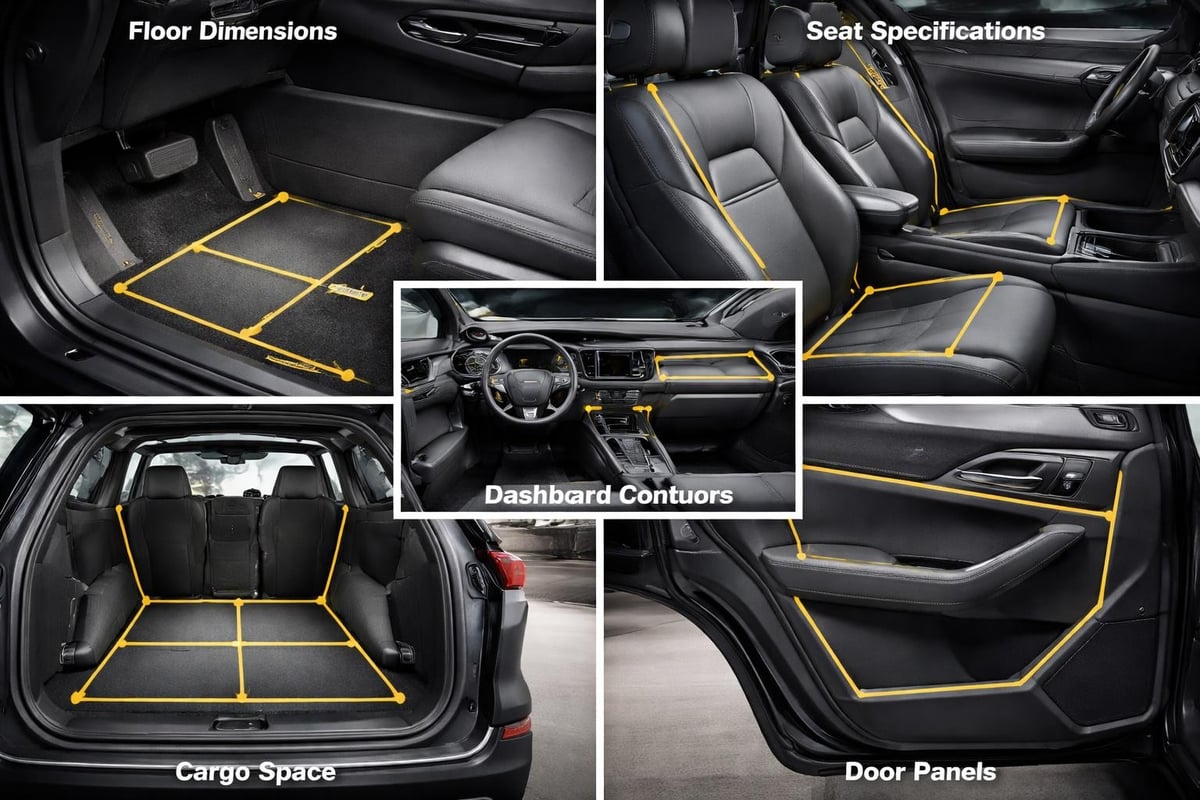
Key measurement areas that determine fitment include:
- Floor space dimensions and transmission tunnel height
- Seat frame width, depth, and headrest configuration
- Dashboard contours and airbag placement zones
- Cargo area dimensions including wheel well intrusions
- Door panel shapes and window proportions
Finding Your Vehicle's Exact Specifications
The journey to properly fit the car begins with accurate information. Your vehicle identification number (VIN) unlocks a treasure trove of specific details about your exact model, trim level, and factory options. This seventeen-character code tells manufacturers precisely which accessories will work with your car.
Most modern accessory retailers now use VIN-based lookup systems. These platforms cross-reference your vehicle's unique specifications with their product databases, filtering out incompatible items before you even see them. The FitMyCar process demonstrates how custom-fit accessories require precise measurements for optimal function.
Manual Measurement Techniques
Sometimes you need to measure yourself, especially for universal-fit products or custom applications. Here's a systematic approach:
- Gather proper tools: Flexible measuring tape, notepad, and your vehicle manual
- Document existing features: Note any factory accessories that might interfere
- Measure multiple times: Verify critical dimensions with at least two measurements
- Account for irregularities: Note curves, slopes, and non-uniform shapes
- Consider seasonal changes: Temperature affects material dimensions slightly
| Area | What to Measure | Common Pitfalls |
|---|---|---|
| Floor Mats | Length, width, height of transmission tunnel | Ignoring pedal clearance zones |
| Seat Covers | Seat width, back height, headrest position | Forgetting side airbag locations |
| Cargo Liners | Floor length/width, wheel well dimensions | Not accounting for hidden storage |
| Sun Shades | Windshield height/width, curve radius | Missing side mirror interference |
Choosing Between Universal and Custom-Fit Products
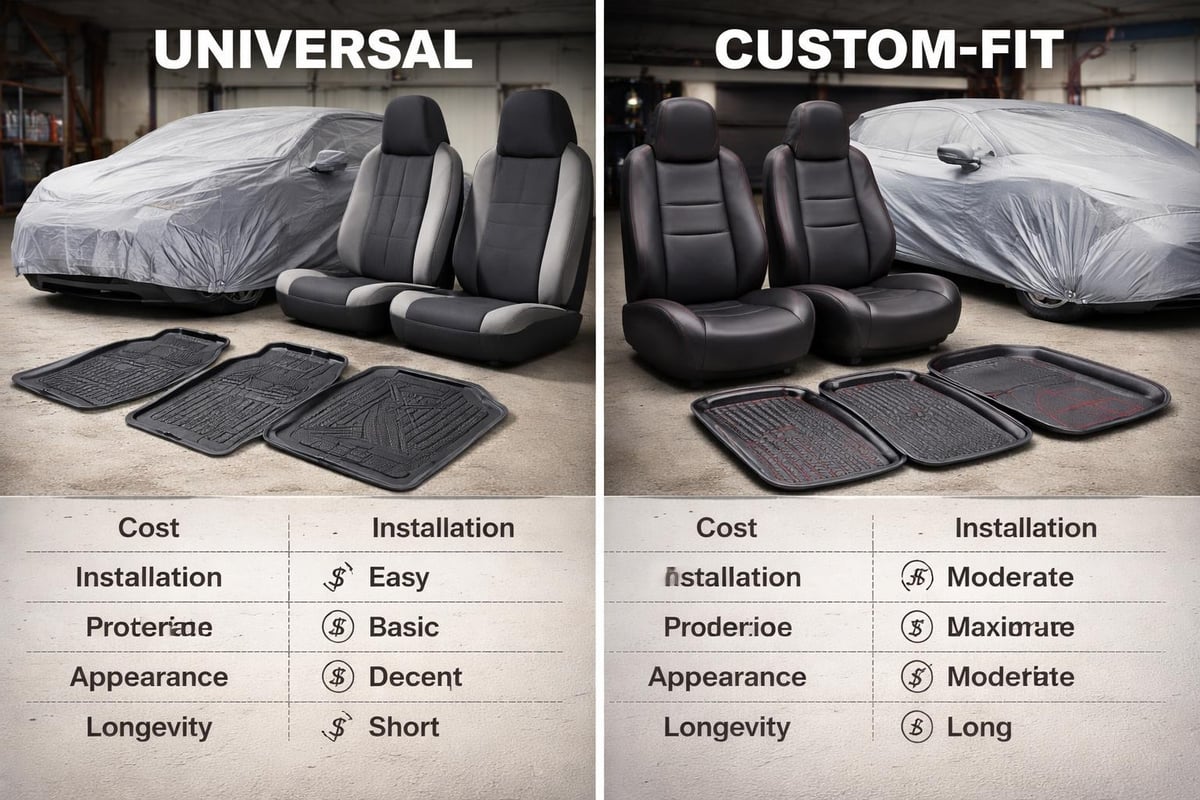
The market offers two primary approaches when you want to fit the car with new accessories: universal-fit and custom-fit options. Each has distinct advantages depending on your priorities, budget, and vehicle type.
Universal-fit products use adjustable designs and flexible materials to accommodate multiple vehicle models. They're typically more affordable and readily available. However, they sacrifice precision for versatility. A universal floor mat might protect your carpet, but it won't hug the contours of your floor pan or integrate with factory retention clips.
Custom-fit products are engineered specifically for your make, model, and year. Quality car accessories designed for specific vehicles provide superior coverage, better aesthetics, and enhanced functionality. They integrate seamlessly with factory features like floor hooks, seat belt anchors, and climate control vents.
When Each Option Makes Sense
Choose universal-fit when:
- Budget is the primary concern
- You change vehicles frequently
- The accessory has minimal contact points
- Exact appearance isn't critical
- You need an immediate temporary solution
Choose custom-fit when:
- Maximum protection is essential
- Professional appearance matters
- Integration with factory features is needed
- Long-term use is planned
- Vehicle-specific challenges exist (odd dimensions, electronic sensors)
Essential Accessories That Must Fit the Car Properly
Certain automotive accessories demand precise fitment for safety, functionality, or maximum protection. Compromising on fit for these items creates problems ranging from minor annoyances to genuine safety hazards.
Floor Protection Systems
Floor mats and liners form your first line of defense against dirt, moisture, and wear. Poorly fitting mats slide under pedals, creating dangerous driving conditions. They bunch up, trap moisture underneath, and fail to protect edges where spills concentrate. Quality floor mats designed to fit the car include retention systems that anchor them securely, raised edges that contain spills, and precise cutouts around pedals and floor-mounted controls.
All-weather mats have become increasingly sophisticated in 2026. Modern designs incorporate 3D scanning of vehicle floors, creating products that capture every contour. They rise along door sills, wrap around transmission tunnels, and provide complete coverage without interfering with seat adjustments or factory floor features.
Protective Covers and Shields
Car covers exemplify why proper fit matters beyond mere aesthetics. A cover that's too large flaps in the wind, potentially scratching paint and working loose during storms. One that's too small stretches across surfaces, failing to protect vulnerable areas and degrading quickly from constant tension.
Modern protective covers use mirror pockets, antenna grommets, and elastic hems to fit the car like a second skin. They account for side mirrors, spoilers, roof racks, and other protrusions that vary by model. Premium covers even incorporate soft inner linings that won't mar delicate paint finishes during installation or removal.
Critical fitment features for car covers:
- Grommets positioned to avoid stretching over accessories
- Reinforced areas over sharp edges and mounting points
- Elastic draw systems that secure without over-tightening
- Ventilation panels positioned above heat zones
- Access ports aligned with door handles and fuel doors
Technology Integration and Modern Fitment Challenges
Vehicles in 2026 bristle with sensors, cameras, and electronic systems that complicate accessory installation. Successfully fitting the car with modern accessories requires awareness of these technological integration points.
Advanced driver assistance systems (ADAS) use cameras and radar sensors mounted throughout vehicles. Floor mats can't block sensor areas in footwells. Dashboard accessories can't interfere with camera sight lines. Even seat covers must accommodate sensors that detect passenger presence for airbag deployment.
Working Around Sensitive Electronics
Many vehicles now include heated and ventilated seats, wireless charging pads, and integrated technology systems. Accessories that block ventilation holes defeat climate-controlled seats. Thick seat covers interfere with wireless charging. Dashboard mounts can block infotainment screens or air vents.
The CarFit program’s approach to helping drivers adjust vehicles for optimal comfort and safety illustrates how proper fitment extends beyond accessories to overall vehicle interaction. This principle applies equally to aftermarket products.
| Technology System | Fitment Consideration | Solution |
|---|---|---|
| Side Airbags | Seat covers must not block deployment | Use certified airbag-compatible covers |
| Wireless Charging | Material thickness affects charging | Choose thin-profile seat protectors |
| Seat Sensors | Weight sensors detect occupants | Avoid adding excessive bulk |
| Dash Cameras | Clear sight lines required | Select low-profile accessories |
| Parking Sensors | Bumper covers can't block sensors | Use precision-cut protective films |

Installation Tips for Perfect Fitment
Even products designed to fit the car perfectly require proper installation techniques. Rushing through installation or skipping preparation steps compromises the fit and performance of otherwise excellent accessories.
Start with a clean workspace. Remove existing accessories and thoroughly clean all surfaces where new products will make contact. Dirt and debris prevent proper adhesion, create noise, and cause premature wear. For adhesive-mounted products, proper surface preparation determines long-term success.
Step-by-Step Installation Process
- Read all instructions completely before starting
- Test fit without securing to identify potential issues
- Make minor adjustments while products remain flexible
- Secure in proper sequence following manufacturer guidelines
- Allow curing time for adhesives before using the vehicle
- Inspect final installation from multiple angles
Temperature affects fitment significantly. Many products become more pliable when warm, making installation easier and allowing them to conform better to vehicle contours. Conversely, cold weather can make flexible materials stiff and difficult to work with.
Maintaining Proper Fit Over Time
Products that fit the car perfectly upon installation can develop problems without proper maintenance. Materials stretch, adhesives degrade, and retention systems wear. Regular inspection and care preserve the precise fit you worked hard to achieve.
Check floor mat positioning monthly, ensuring retention clips remain engaged and mats haven't shifted. Inspect seat covers for signs of slipping or bunching, adjusting straps and hooks as needed. Examine protective covers for areas where material has stretched or elastic has weakened.
Maintenance schedule for common accessories:
- Weekly: Quick visual inspection during routine cleaning
- Monthly: Detailed check of retention systems and adjustments
- Quarterly: Remove and reinstall seasonal items, inspect for wear
- Annually: Deep clean, condition materials, replace worn components
- As needed: Address any shifting, slipping, or performance issues immediately
Selecting Quality Products at Iverol
Finding accessories that truly fit the car requires shopping from suppliers who prioritize compatibility and precision. The comprehensive selection at Iverol focuses on products engineered for specific vehicle applications, eliminating guesswork from the selection process.
Quality manufacturers invest in vehicle-specific research and development. They measure actual vehicles, account for trim variations, and test products under real-world conditions. This dedication to precision creates accessories that install easily, perform reliably, and maintain their fit throughout their service life.
When evaluating potential purchases, examine product descriptions for specific vehicle compatibility information. Listings should reference make, model, year range, and often trim level. Vague descriptions like "fits most vehicles" signal universal-fit products that may require compromise. Detailed specifications indicating "engineered for 2024-2026 Honda Accord EX and Sport models" demonstrate the precision needed to truly fit the car.
Quality Indicators to Consider
Beyond basic compatibility, several factors indicate whether accessories will maintain proper fitment over time. Material quality affects how products wear and whether they retain their shape. Premium floor mats use high-density rubber that resists compression and maintains raised edges. Quality seat covers incorporate heavy-duty elastic and reinforced stitching at stress points.
Manufacturing precision determines initial fit quality. Products made from precise molds and patterns conform better to vehicle surfaces. Look for accessories created using digital scanning technology rather than manual approximations. Modern manufacturing capabilities enable the precision needed for truly custom-fit products.
Finding products that properly fit the car transforms your ownership experience from frustrating to satisfying, protecting your investment while enhancing comfort and functionality. Whether you need precision floor protection, custom seat covers, or specialized care products, Iverol LLC offers carefully curated automotive accessories designed for exact compatibility with your vehicle. Our selection combines functionality and durability with the precise engineering needed to integrate seamlessly with your car's unique specifications.
Fitting Car Accessories: Complete Guide for 2026
Feb 21, 2026
Styling Car: Transform Your Vehicle’s Look in 2026
Feb 23, 2026
Further reading


Leave a comment